
Coastal Current — July 2026
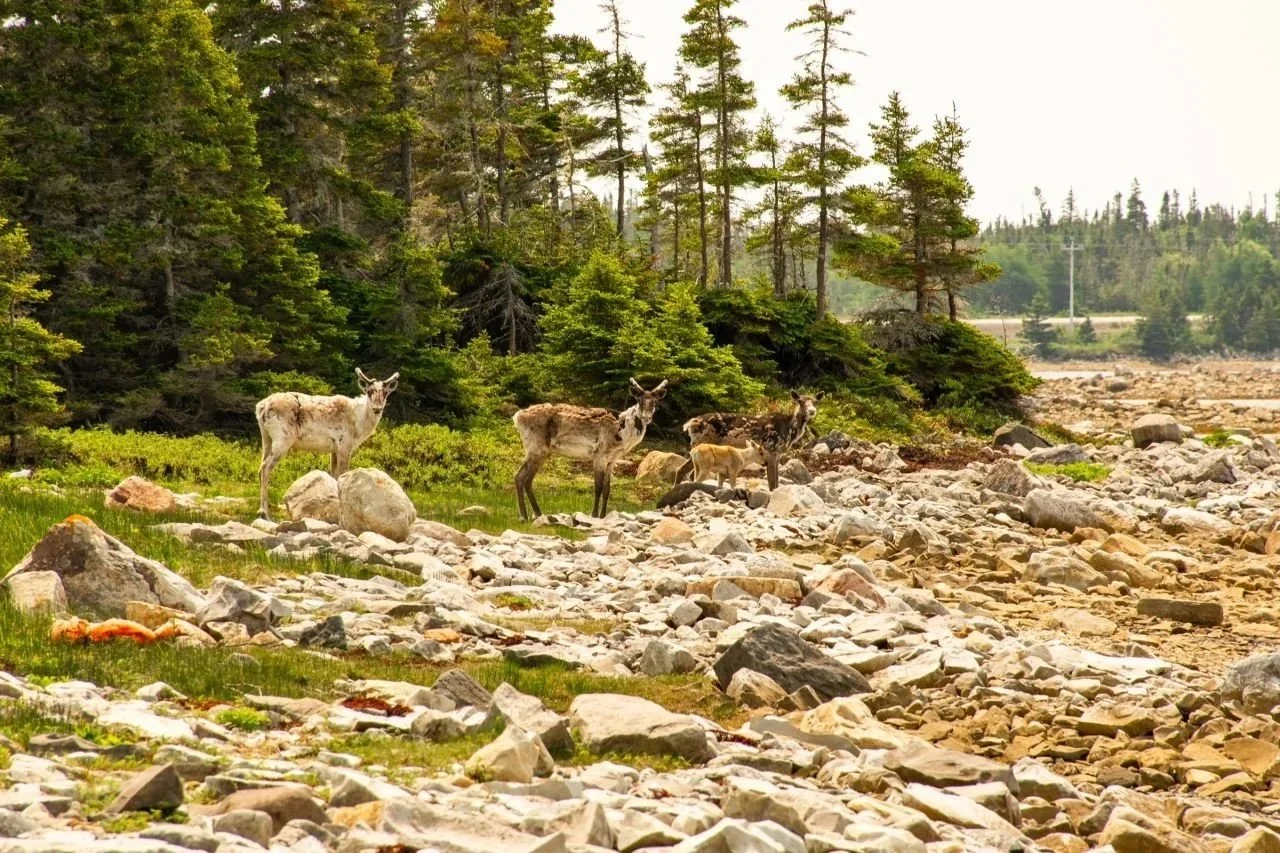
Caribou at the Great Coastal Trail.
Photo by 📷Braeden Reeves
Message from our Executive Director
Welcome to this edition of the Coastal Current—where every story, every community, and every step brings us closer to building something extraordinary together!
Future Peninsula: Lessons from the Edge of the Atlantic

1) How the Great Coastal Trail could become a Catalyst for Generational Change
The future is not something that happens to us. It is something we build.
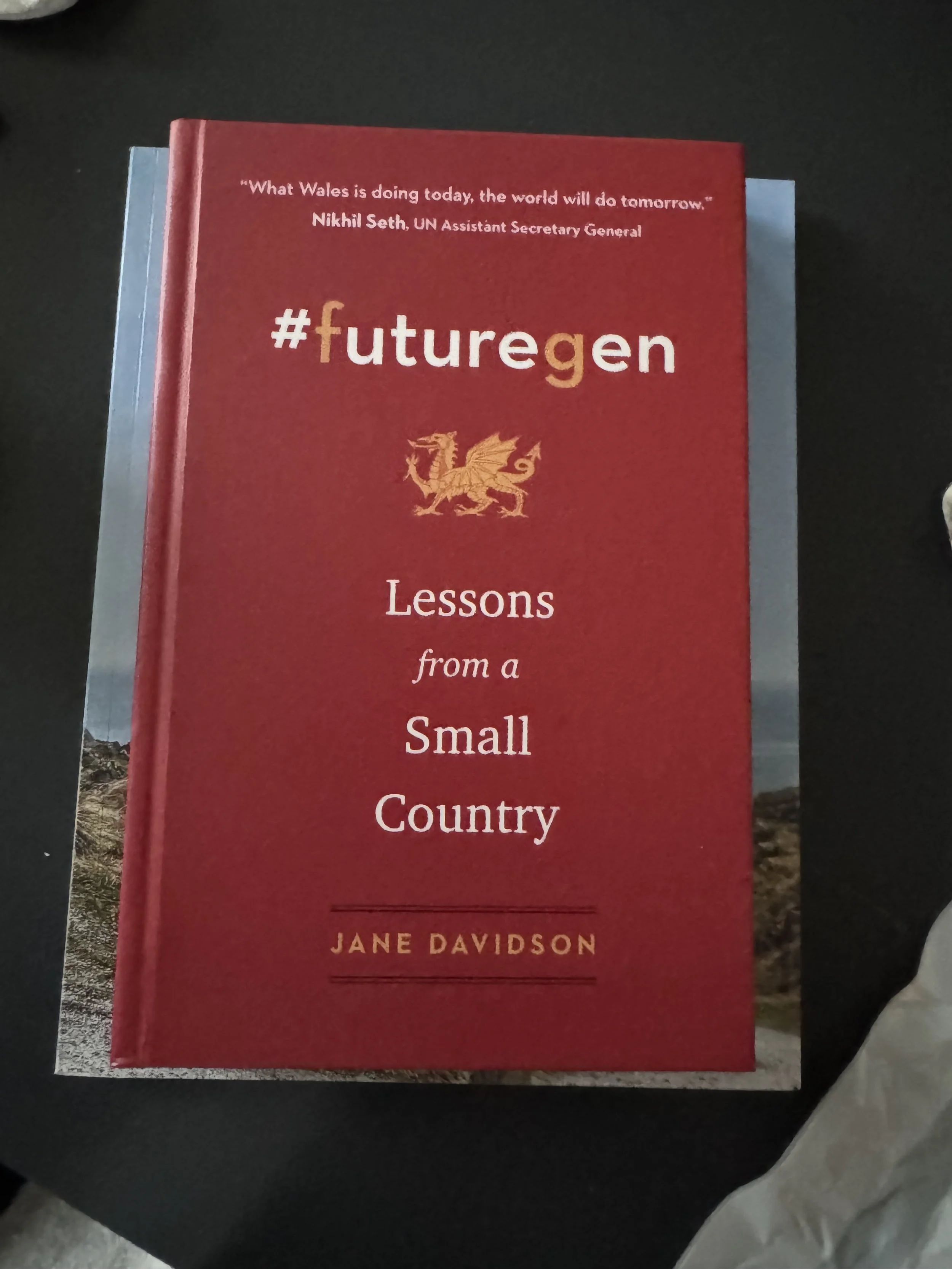
Inspired by the themes explored in the Book by former Welsh Minister Jane Davidson. “#FutureGen: Lessons from a Small Country”,
We examine how the Great Coastal Trail could serve as a catalyst for generational change on Newfoundland and Labrador's Great Northern Peninsula.
The Great Northern Peninsula sits at the edge of the North America.
To some, it is remote.
To others, it is isolated.
To those who call it home, it is simply where everyday life happens.
For generations, the communities of the Northern Peninsula have lived with uncertainty. Cod moratoriums, declining populations, aging infrastructure, youth outmigration, shrinking tax bases, labour shortages, and the slow erosion of services have shaped much of the public conversation about the region.
For decades, the story told about rural Newfoundland has largely been one of decline. And for decades we have been asking how we can stop it.
But what if we have been asking the wrong question?
Instead of asking how we stop decline, perhaps we should be asking how we create a future worth staying for.
This is the lesson that emerged repeatedly during the Great Coastal Trail Authority's recent study tour of Wales.
The Wales Coast Path was never simply about building a trail.
It was always about building a future.
2) Thinking Beyond Election Cycles
One of the central themes of Jane Davidson's work is the importance of thinking beyond political terms, annual budgets, and short-term priorities.
When Wales adopted the Well-being of Future Generations Act, it fundamentally changed how decisions were made.
The question became:
"How will this decision affect future generations?"
Not next year.
Not the next election.
Not the next budget cycle.
Future generations.
Imagine if every major decision on the Great Northern Peninsula was filtered through that lens.
Would we invest differently?
Would we prioritize different projects?
Would we see trails differently?
Perhaps.
Because trails are often dismissed as recreational luxuries.
Yet around the world, they are proving to be powerful economic infrastructure.
They attract investment.
They create businesses.
They encourage healthier communities.
They support entrepreneurship.
They strengthen cultural identity.
They connect people to places.
Most importantly, they create reasons for people to stay.
3) The Wealth We Already Possess
One of the greatest misconceptions about rural communities is that they lack assets.
The Northern Peninsula is extraordinarily wealthy.
Perhaps not financially.
But culturally.
Environmentally.
Historically.
Experientially.
Few places on Earth possess the combination of assets found here.
Two UNESCO World Heritage Sites. (and a third across the straits in Labrador)
Globally significant wildlife.
Ancient coastal landscapes.
Viking history.
Indigenous history.
Basque history.
French history.
Fishing heritage.
Icebergs.
Whales.
Moody skies.
Authentic communities.
Thousands of years of stories.
The challenge has never been a lack of assets.
The challenge has been connecting those assets into an experience that creates economic value while preserving what makes the region special.
That is where the Great Coastal Trail becomes more than a trail.
It becomes a framework.
4) A Different Kind of Infrastructure
Traditionally, infrastructure means roads, bridges, buildings, and utilities.
Those investments remain important.
But future-focused communities increasingly understand another form of infrastructure:
Experience infrastructure.
The systems that create reasons for people to visit.
Reasons to invest.
Reasons to stay.
Reasons to return.
Trails are among the most effective forms of experience infrastructure available to rural regions.
They are relatively low-cost compared to traditional infrastructure.
They create economic activity across multiple sectors simultaneously.
They support tourism.
Hospitality.
Retail.
Transportation.
Guiding.
Food services.
Arts and culture.
Outdoor recreation.
Accommodation.
They distribute visitors throughout communities rather than concentrating activity in a single location.
And unlike many forms of infrastructure, they become more valuable over time.
5) Building Capacity, Not Dependency
Successful trail systems are not built by governments alone.
They are built by communities.
The government provides support,
Funding.
Policy.
Coordination.
But communities provide ownership,
Stewardship.
Pride.
Energy.
The Great Coastal Trail Authority has embraced this philosophy from the beginning.
The goal is not simply to build a trail.
The goal is to build local capacity.
To create opportunities for youth.
To support entrepreneurship.
To engage volunteers.
To empower communities.
To leave behind something more valuable than infrastructure.
To leave behind confidence.
6) The Future Generation Test
Imagine standing on the Great Coastal Trail fifty years from now.
Perhaps near Cape Onion.
Perhaps overlooking the Straits.
Perhaps somewhere between fishing villages that have reinvented themselves through tourism, culture, and outdoor recreation.
A young family passes.
A local guide leads visitors along the coast.
A café that did not exist in 2026 is thriving.
Interpretive panels tell stories that might otherwise have been lost.
Students who once worked summer jobs on trail crews now own businesses in their communities.
Visitors arrive not because someone convinced them to come.
But because the world knows this place.
That future is not guaranteed.
But it is possible.
And every kilometre of trail built today contributes to that possibility.
7) Communities on the Edge
The Great Northern Peninsula has always lived on the edge.
The edge of the continent.
The edge of the Atlantic.
The edge of economic change.
The edge of uncertainty.
But perhaps being on the edge is not a weakness.
Perhaps it is an advantage.
Because from the edge, you can see further.
The Great Coastal Trail is ultimately an act of optimism.
A belief that rural communities have a future.
A belief that culture has value.
A belief that landscapes matter.
A belief that people deserve opportunities regardless of geography.
And a belief that future generations deserve to inherit more than stories of what once was.
They deserve a future worth walking toward.
Erika Pardy
Executive Director
GCTA
GCTA’s Atlantic Canada Trails Conference and Trade Show 2026
Planning for the 2026 Atlantic Canada Trails Conference and Trade Show is moving ahead. We have secured Theatre Newfoundland Labrador in Cow Head as the venue for our main sessions and are receiving exciting speaker confirmations. More program and registration details will be announced soon, so visit the GCTA’s conference webpage for the latest updates.
Wales Coast Path Collaboration & Visit
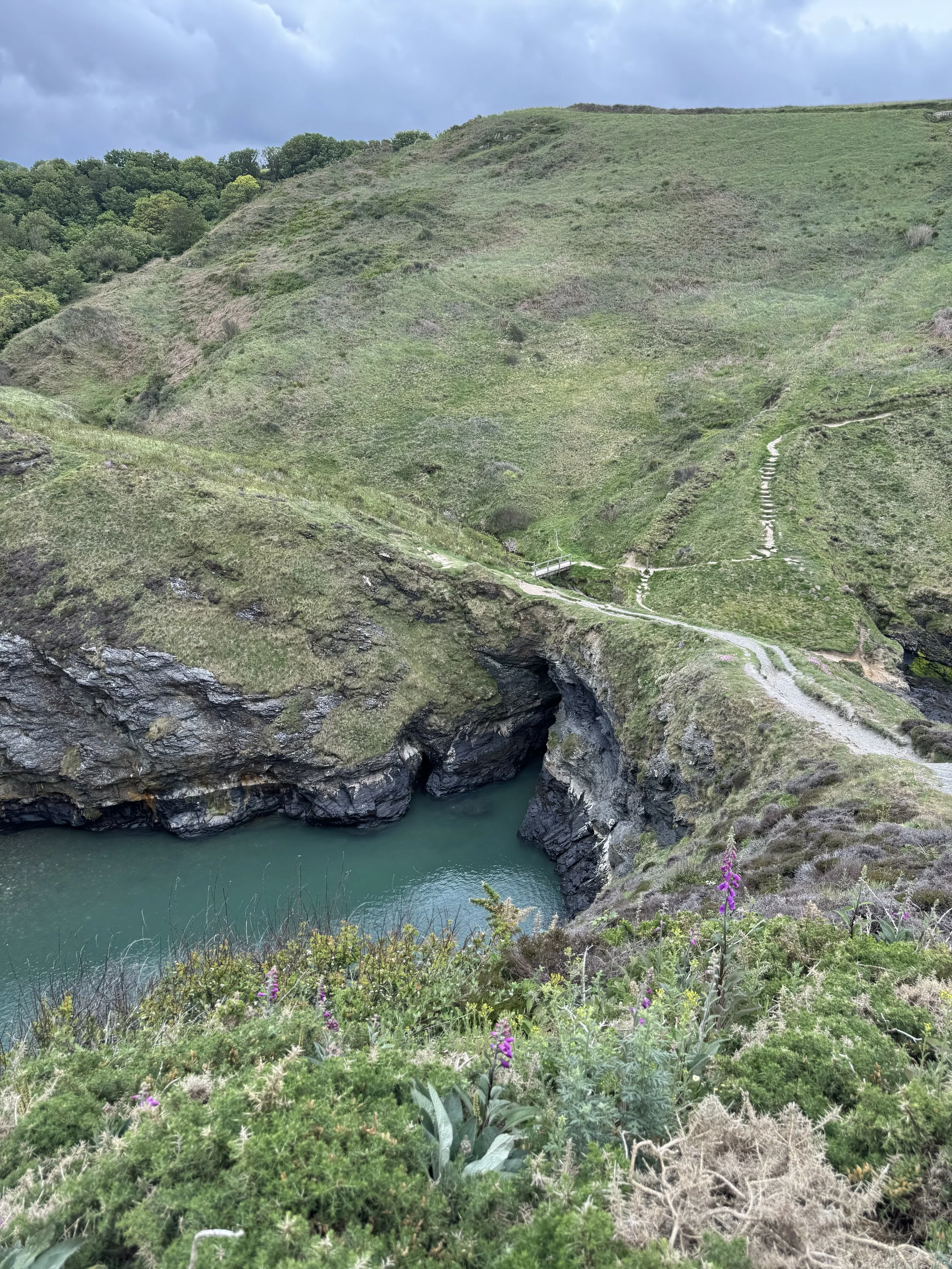
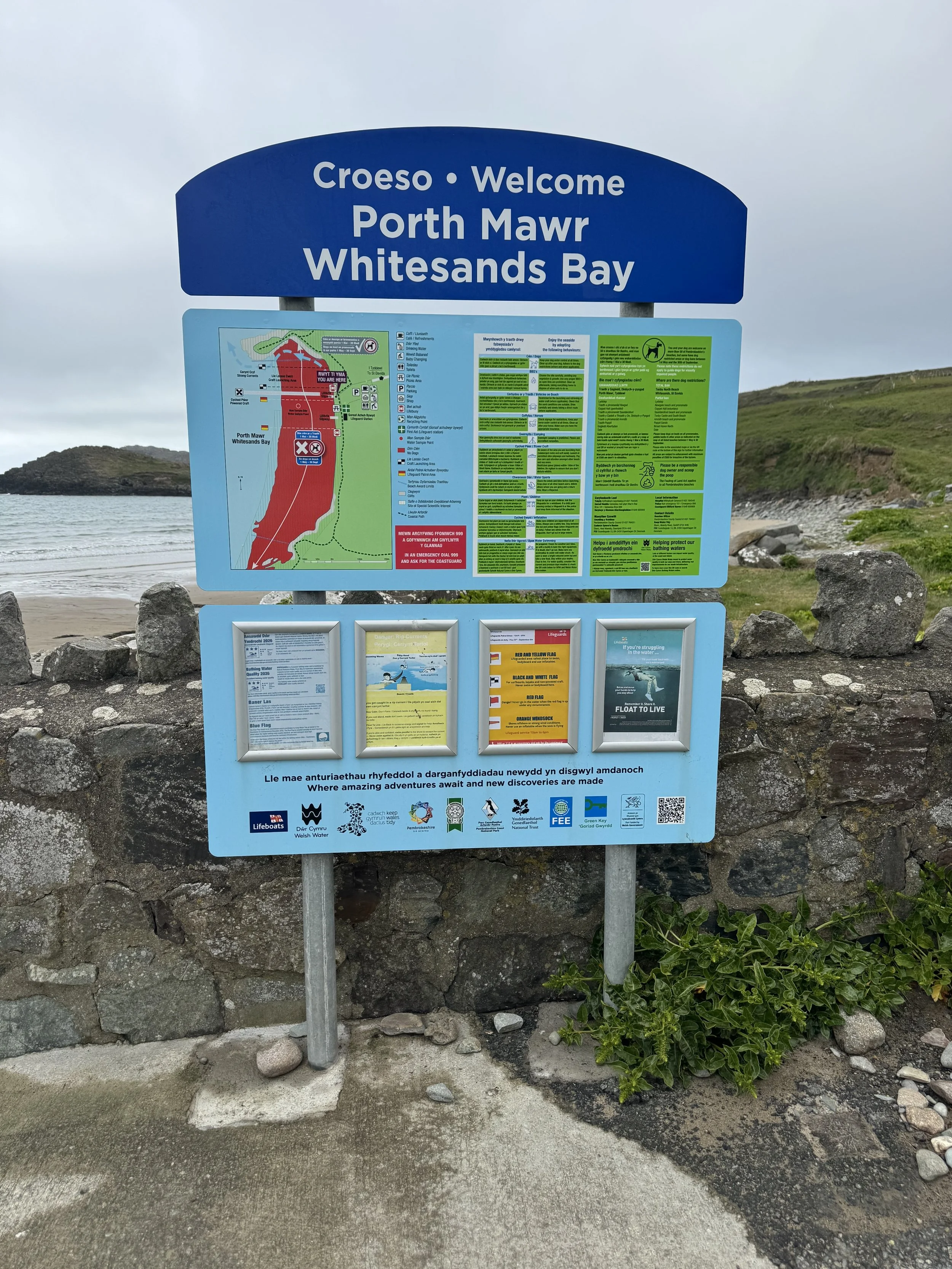
The Great Coastal Trail Authority recently travelled to Wales to meet with collaborators and learn from the Wales Coast Path. From the historic streets of Chester to the dramatic cliffs of Pembrokeshire, the urban waterfronts of Cardiff Bay and memorable fish and chips in New Quay, the visit offered an inspiring look at coastal trail development in action.
Opened in 2012, the Wales Coast Path is the world’s first continuous coastal path. Stretching approximately 1,400 kilometres, it demonstrates what is possible when governments, communities, conservation organizations, tourism operators, volunteers and businesses unite behind a shared vision.
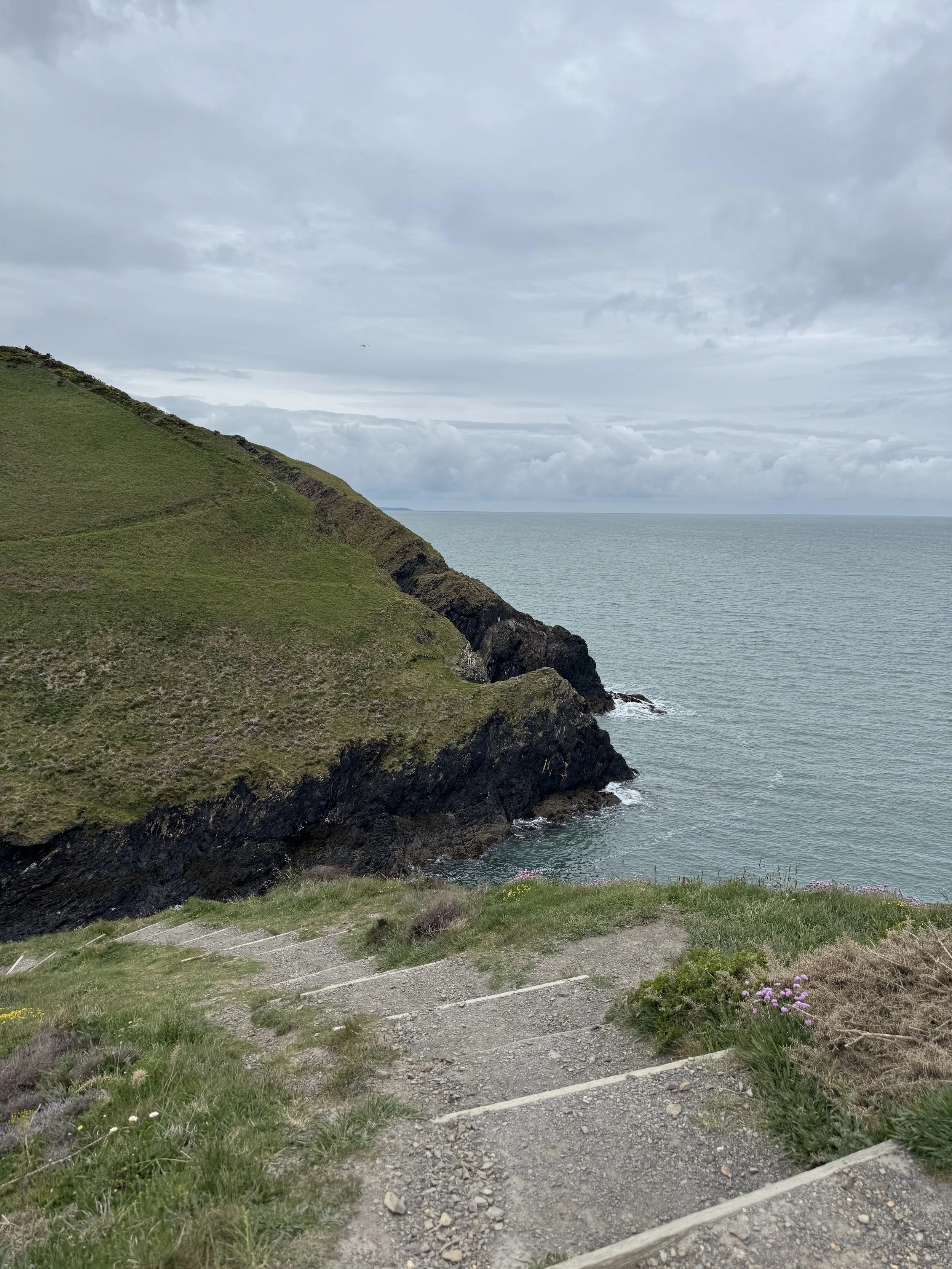
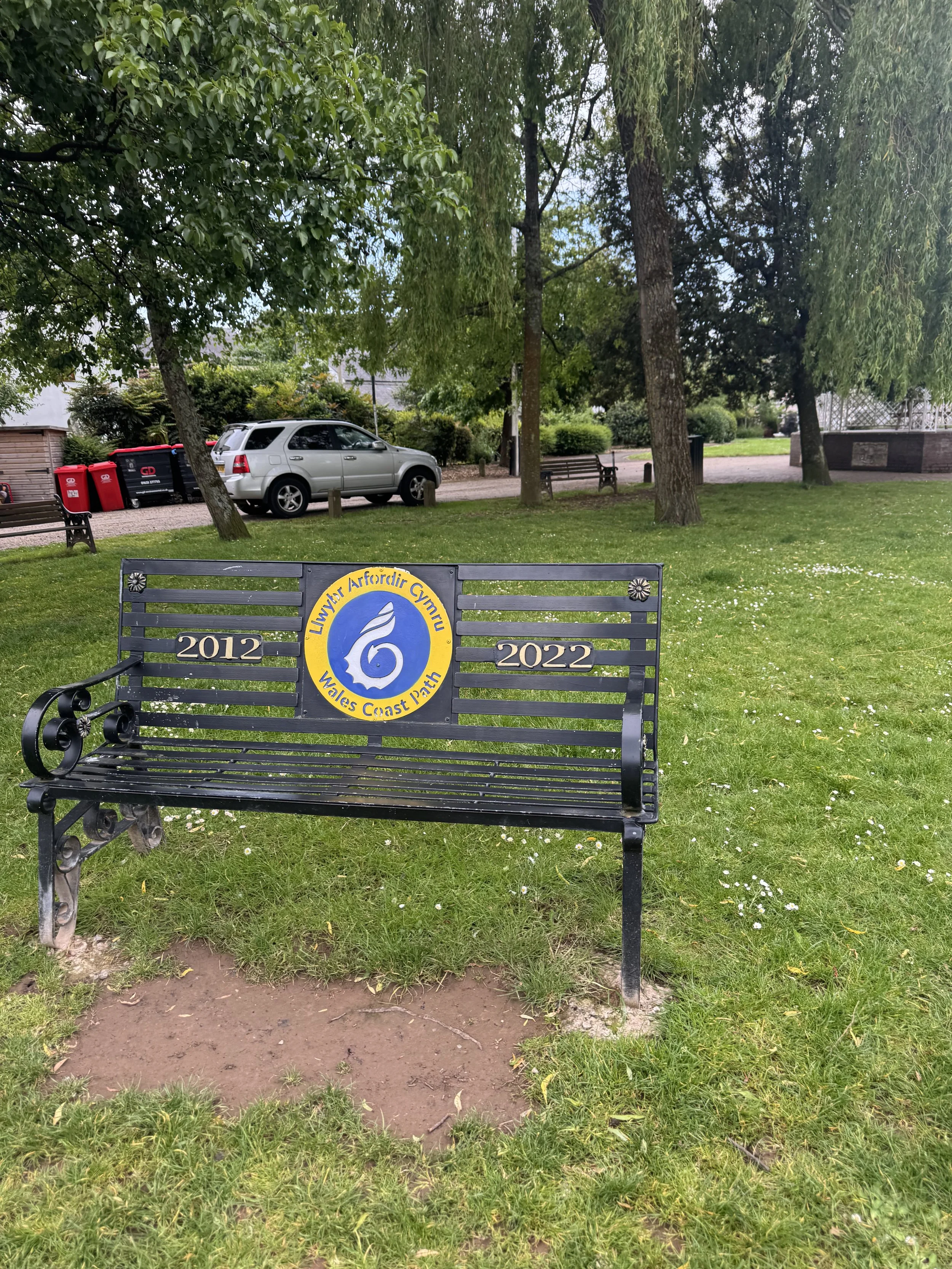
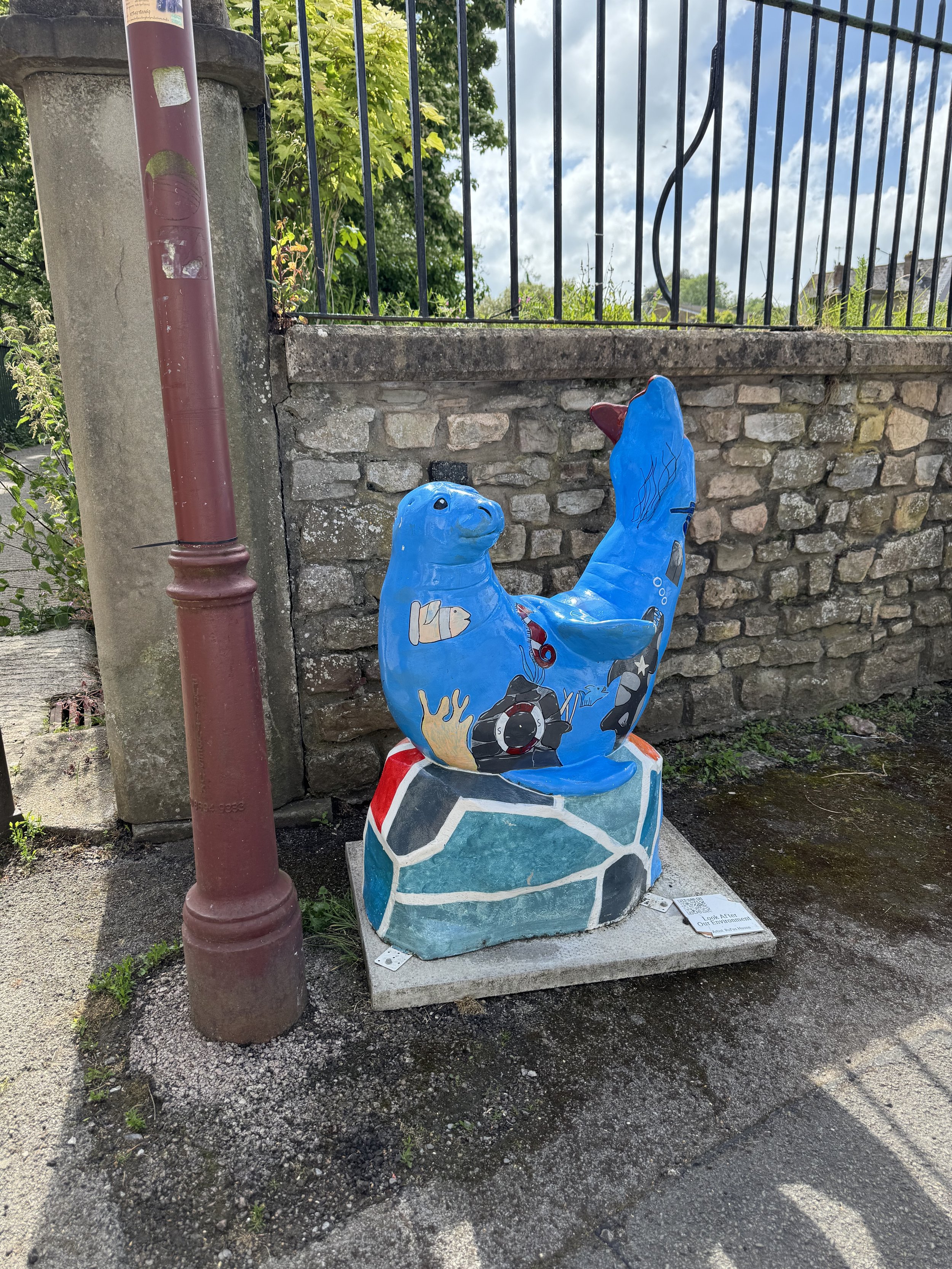
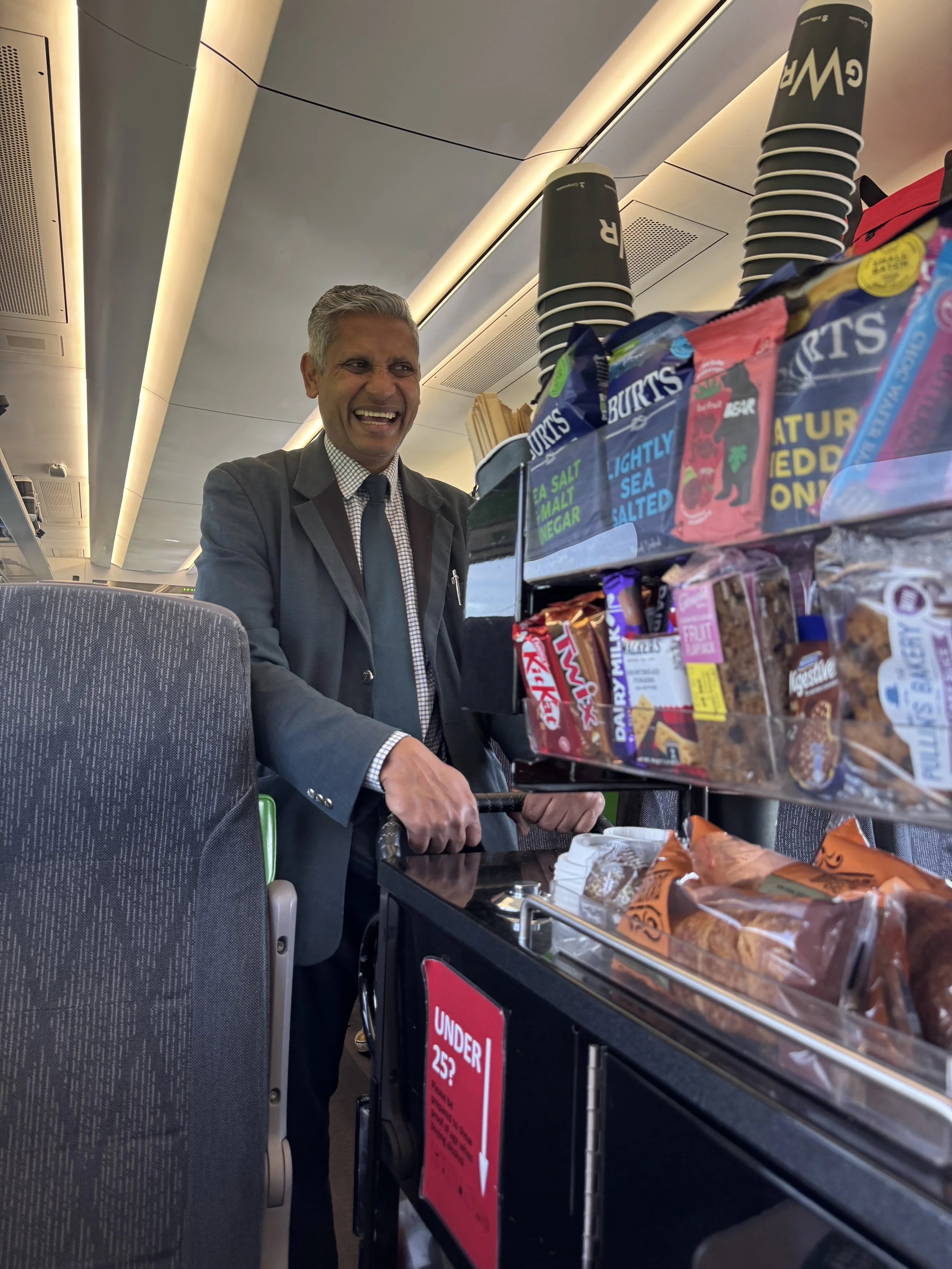
Throughout the visit, the GCTA Team explored coastal erosion management, trail realignment, conservation practices, responsible recreation, volunteer and youth engagement, interpretation, branding, tourism integration and community partnerships. They met with representatives from the Wales Coast Path team, Natural Resources Wales, Visit Wales, the Welsh Government, local councils and community organizations whose openness and expertise left a lasting impression.
Perhaps the greatest takeaway was the philosophy behind the path: collaboration over competition, flexibility over rigidity and an understanding that trails are not simply recreational infrastructure, but long-term investments in communities, culture, health and economic resilience.
The knowledge shared during this visit will help guide the future development of the Great Coastal Trail, saving years of trial and error while strengthening GCTA’s ability to create a sustainable coastal trail experience rooted in the communities and landscapes of Newfoundland and Labrador’s Great Northern Peninsula.
Rebranding
As we continue to make the Great Northern Peninsula a world renown trail destination, and as we get shovels to the ground this summer we are humbled by the kindness and support fellow trail organizations have shown us.
As our organization continues to grow and evolve, we felt it was time for our brand to evolve with it. Although a full announcement is yet to be made, we have been slowly transitioning to our new brand. The new look for the GCTA, includes a refreshed visual identity and a brand-new website designed to better tell the story of the Great Coastal Trail and the communities that make it possible.
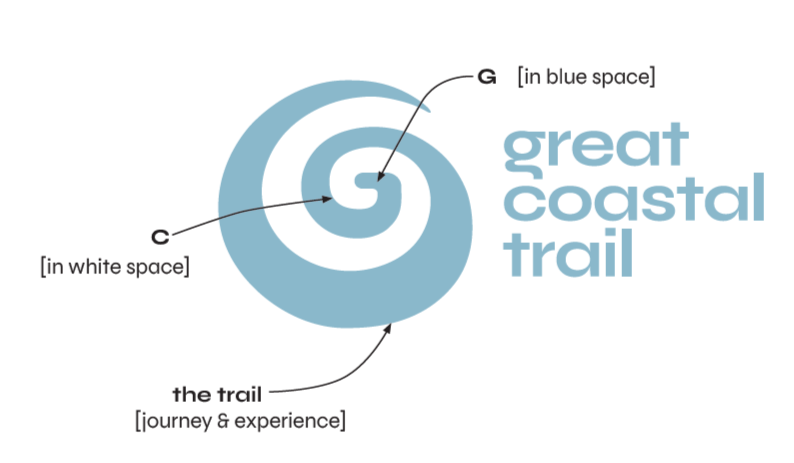
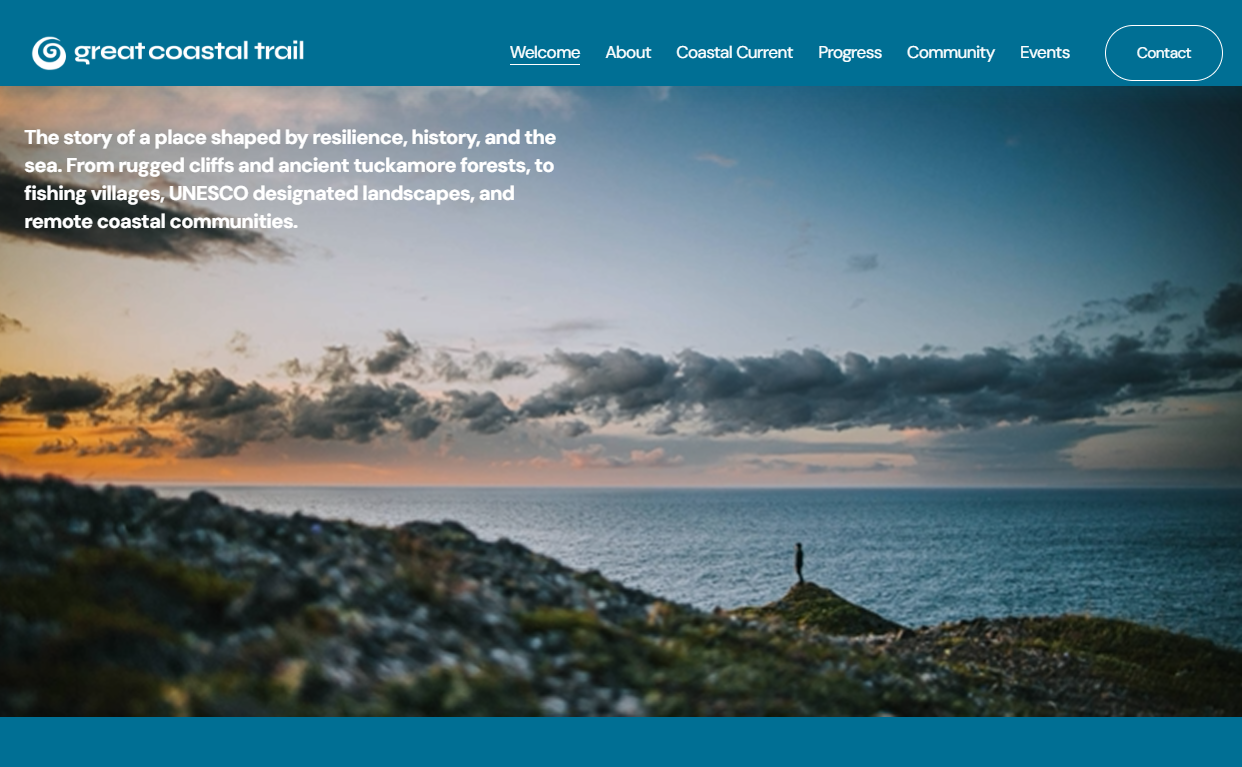
While our look may be changing, our mission remains the same: connecting communities, protecting our natural and cultural heritage, and creating new opportunities for the people and places that call this region home.
We kindly invite you to check our new website and social media accounts. As always, we’d love to hear from you so if you have comments, stories or proposals to make, don’t hesitate in reaching out to us at info@greatcoastaltrail.com
We’d like to thank Matt Reynolds from Forgather Studio for the great work in translating our vision into reality!
GCTA at the Inaugural Canadian Trail Summit
The GCTA was selected to attend and speak this June in Winnipeg for the first-ever Canadian Trail Summit. Hosted by Trans Canada Trail, the national gathering brought together trail managers, advocates, researchers and innovators to share ideas and explore the future of trails across Canada.
Their experience began with a field trip to FortWhyte Alive, where they explored the reclaimed urban green space through guided outdoor activities. Over the following days, the GCTA Team attended sessions covering nature and community health, GIS innovation, responsible storytelling, accessibility, sustainable trail management, visitor engagement and data-informed stewardship. These conversations offered practical ideas that can help guide the planning, interpretation and long-term management of the Great Coastal Trail.
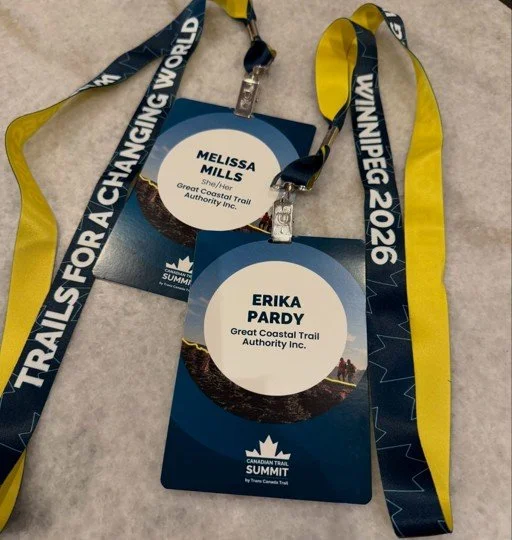
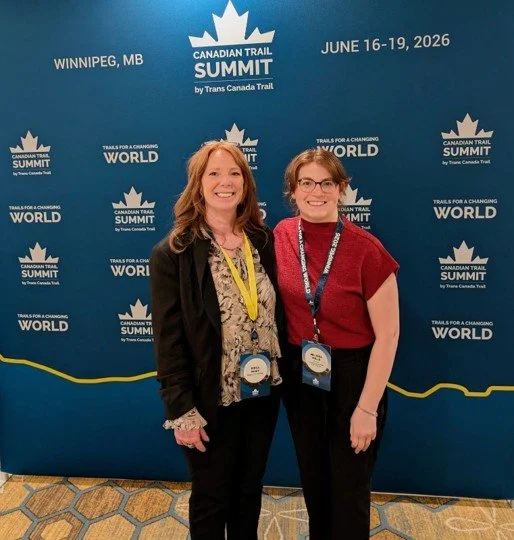
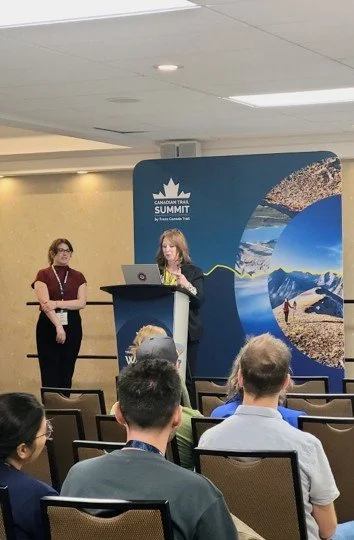
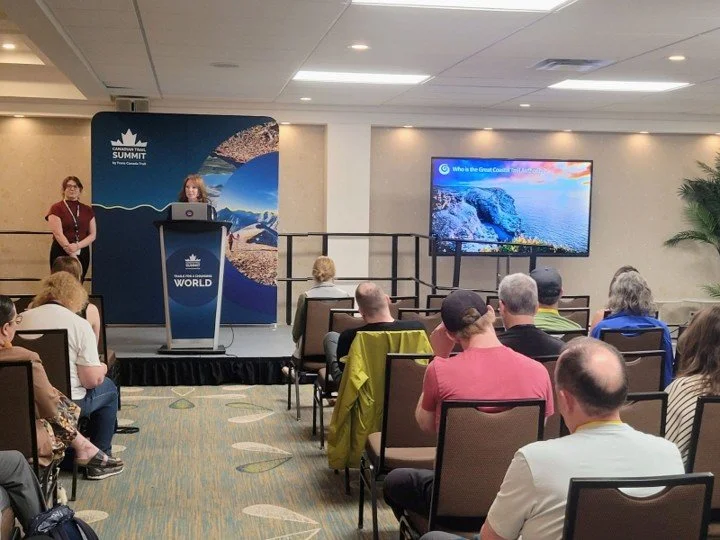
A major highlight came when the Team represented the GCTA during the session “Destination Development: Trail Investments that Boost Local Economies.” They shared how communities across Newfoundland and Labrador’s Great Northern Peninsula are working together with the Great Coastal Trail around a shared trail vision, demonstrating how trail development can strengthen local economies, celebrate culture and create new opportunities for collaboration.
The Summit provided a valuable opportunity to exchange knowledge, strengthen national relationships and bring new perspectives home to the Great Coastal Trail. It also reinforced GCTA’s role within Canada’s growing trail sector and the importance of building trails that are inclusive, sustainable and deeply connected to the communities they serve.
Jennifer Pharr Davis visit to the GNP
We thought it was pretty special to welcome Jennifer Pharr Davis and her family to Newfoundland and Labrador for the very first time on July 18!
Jennifer will return this October as the keynote speaker for our second annual Atlantic Canada Trails Conference, so having the opportunity to introduce her and her family to a little true Newfoundland hospitality ahead of the conference was pretty cool.
For those who may need a reminder, Jennifer is an internationally recognized long-distance hiker, author, speaker, and National Geographic Adventurer of the Year. She has hiked the Appalachian Trail three times and, in 2011, became the first woman to hold its overall speed record—completing approximately 2,190 miles in just 46 days and averaging an incredible 47 miles per day.
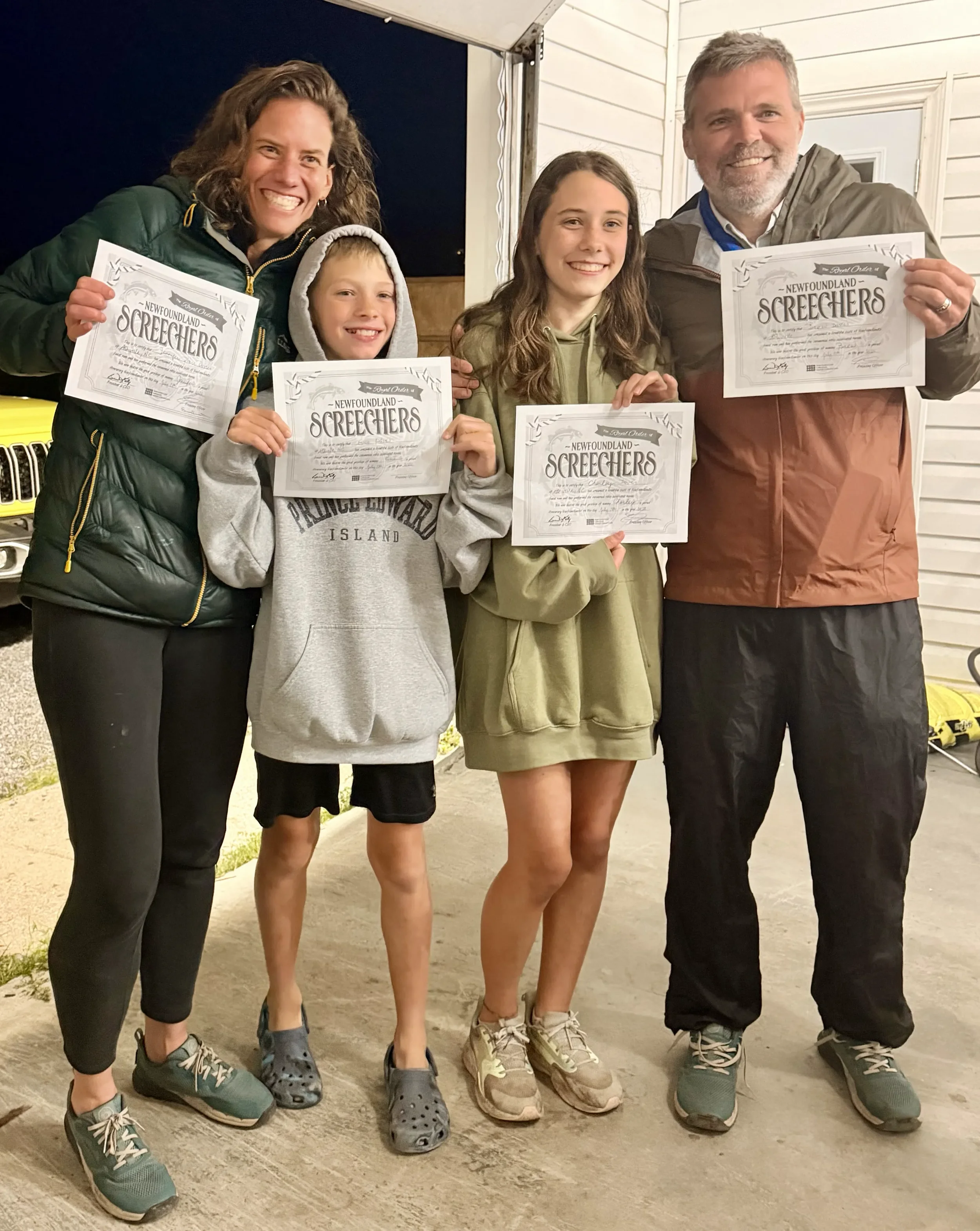
During their visit, the family was officially screeched in, experienced a genuine Newfie shed party, and were great sports about sampling some of our traditional Newfoundland delicacies. Charley and Gus proved to be very brave souls, and Jennifer’s husband and partner-in-crime, Brew Davis, was game for just about anything!
There was plenty of laughter, storytelling, music, and the kind of warm welcome that Newfoundland and Labrador does best.
We loved giving Jennifer and her family their first taste of our province, and we cannot wait to welcome her back in October to share her remarkable story with trail builders, community leaders, and outdoor enthusiasts from across Atlantic Canada.
Up Up Marketing Team
We also had the pleasure of welcoming Steven and Alexander from Up Up Digital to the Great Northern Peninsula as they set out to capture the people, businesses, communities, and landscapes that make this region so extraordinary.
Over eight full days, often working 16-hour days, they travelled throughout the Peninsula, visited communities, spoke with local residents and business owners, and took the time to genuinely understand the places and people the Great Coastal Trail will one day connect.
They did not simply arrive with cameras and a shot list. They listened. They asked questions. They spent time with people. They learned about the history, challenges, resilience, and opportunities that exist throughout the region.
Steven and Alexander even joined us for a community engagement session with residents of the Straits, giving them an opportunity to hear directly from the people whose communities and stories will help shape the future of the Great Coastal Trail.
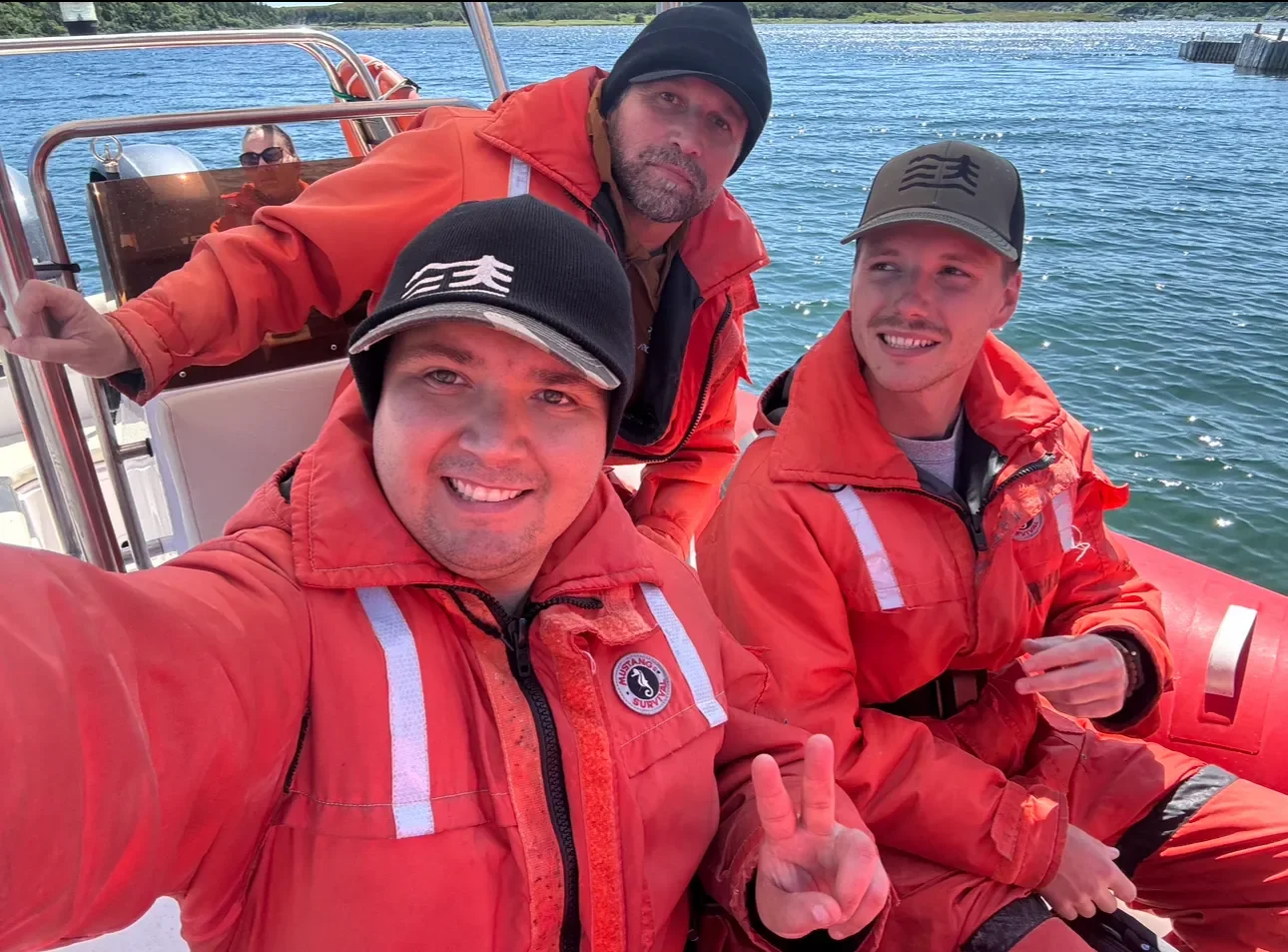
We were also incredibly lucky that their visit overlapped with Jennifer Pharr Davis and her family’s first trip to Newfoundland and Labrador. It meant everyone had the chance to come together for a proper fish fry in the shed—complete with local food, stories, laughter, and the kind of hospitality that makes the Great Northern Peninsula so special.
Up Up Digital has been helping us tell the story of this project in a way that is honest, grounded, and rooted in the communities themselves. Their work will help show that the Great Coastal Trail is about far more than a line on a map—it is about the people, businesses, culture, and communities that already exist along the way.
Eight days, countless conversations, long drives, early mornings, late nights, one unforgettable shed party, and a genuine effort to understand the Great Northern Peninsula.
We think that is pretty special, too!
Progress Update
2026 Great Coastal Trail Summer Crew & Ground Truthing
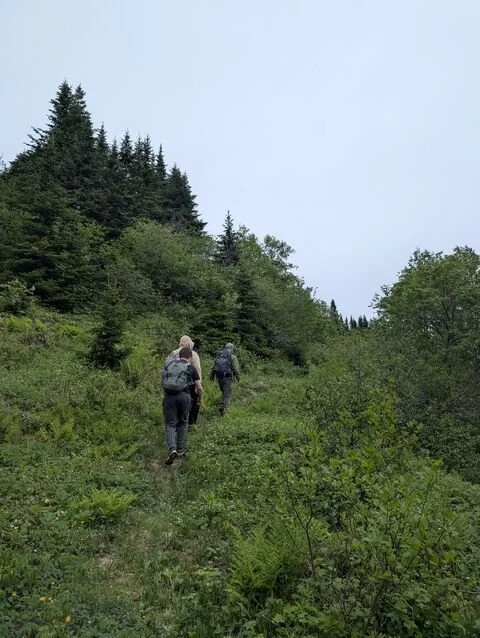
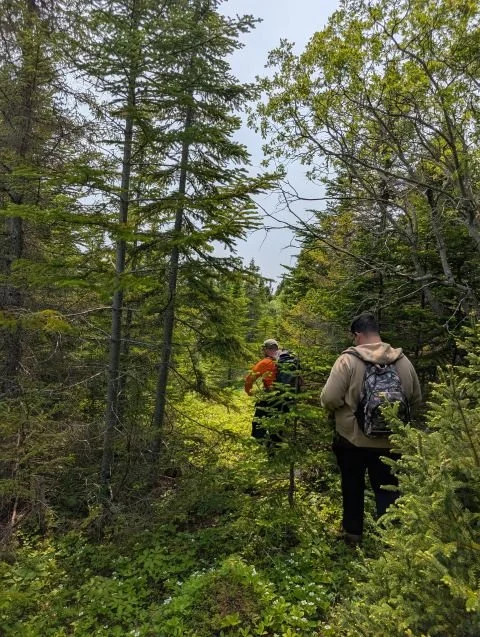
We’re excited to introduce the 2026 Great Coastal Trail summer crew, a talented team who is helping to bring the Great Coastal Trail from maps and ideas into real places you can walk, hike, and experience along Newfoundland and Labrador’s Great Northern Peninsula. Meet the 2026 Summer Crew.
In just around 2 weeks on the ground, our incredible summer trail crew has completed 250 kilometers of ground truthing along the proposed Great Coastal Trail route. So, what exactly is ground truthing?
It's the process of physically walking a proposed trail route to verify what maps, aerial imagery, and GIS data simply can't tell you. A route may look perfect on a computer screen, but until you have boots on the ground, you don't know what you'll actually find.
Terrain changes. Wetlands, barrens, blowdowns, erosion, hidden viewpoints, cultural features, access challenges and opportunities all reveal themselves only through firsthand observation. Ground truthing is where planning meets reality and it's one of the most critical steps in building a world-class trail. That's an incredible achievement and a testament to the dedication, professionalism and work ethic of this team.
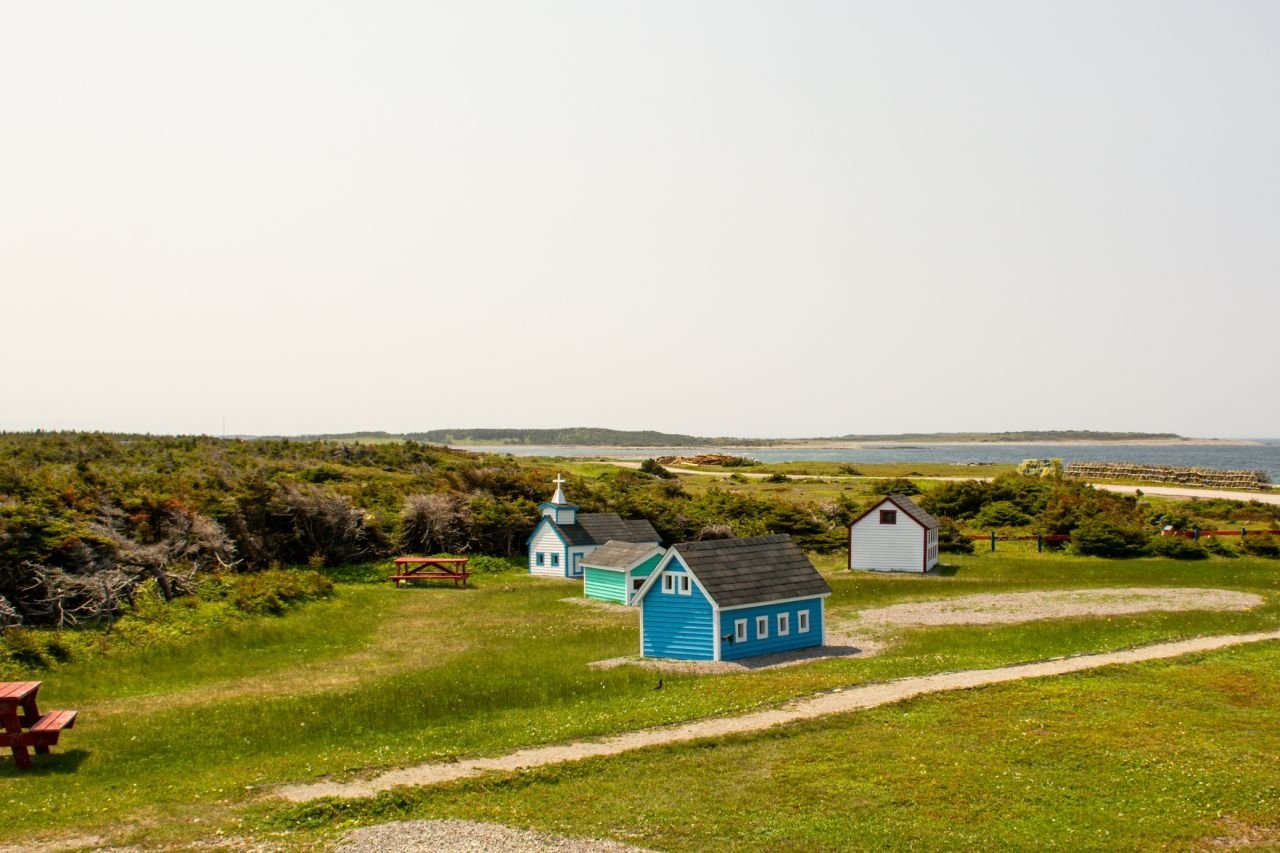
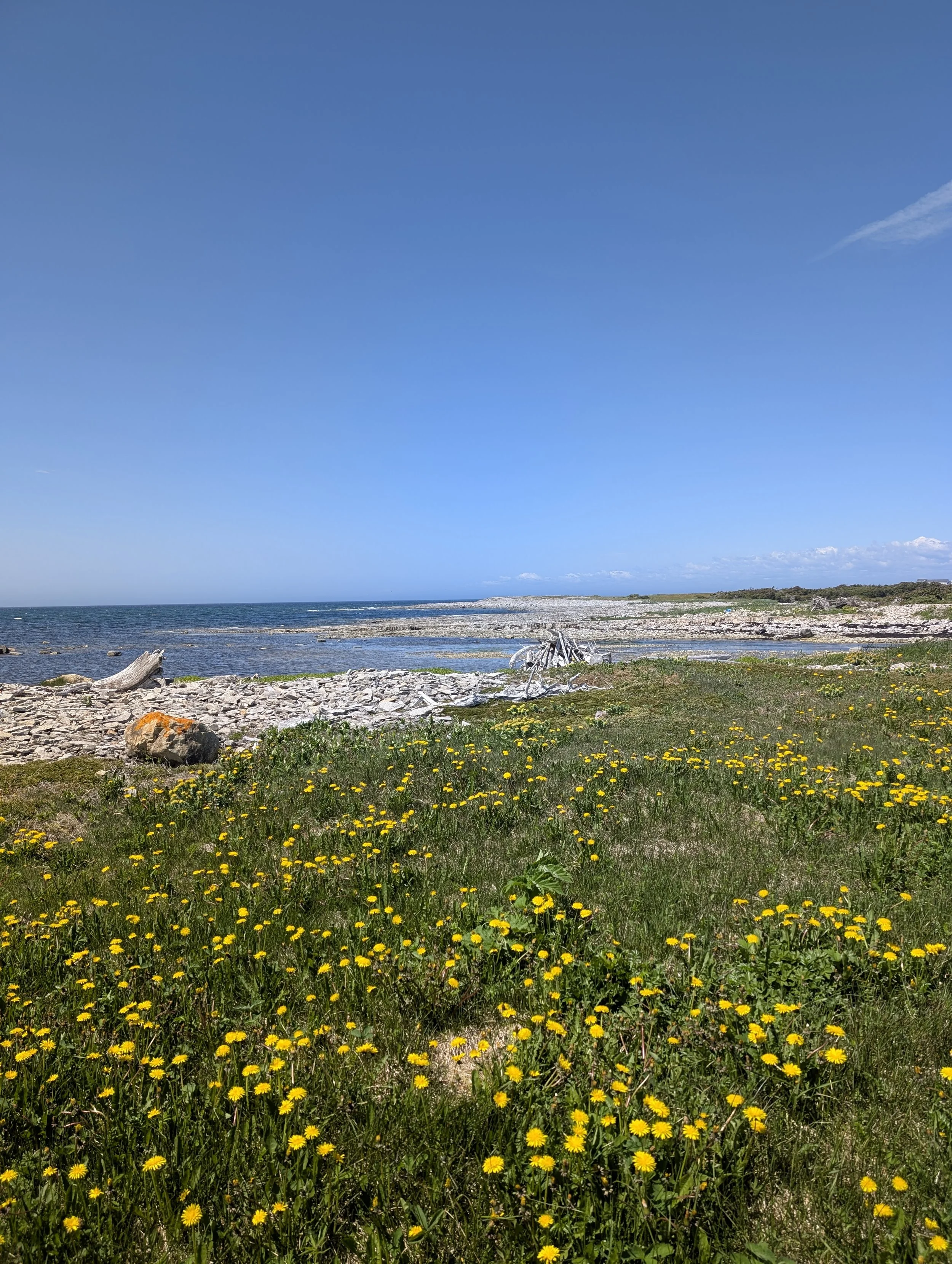
A huge shout-out to our summer crew for the energy and determination they've brought to the project. And a massive thank you to the GCTA team, who developed the Standard Operating Procedures, GIS framework, GPS data collection systems and field protocols that make work like this possible.
Good data doesn't happen by accident, it happens because great teams put great systems in place. This is what building the Great Coastal Trail looks like. It's not always glamorous, but every kilometre walked, brings us one step closer to creating something that will connect communities, protect our natural heritage, and leave a lasting legacy for generations to come.
We would like to thank our friends and supporters from the Trans Canada Trail, Government of Newfoundland and Labrador, and the towns and residents of the Great Northern Peninsula!
Community Story Spotlight
The Annual Caplin roll
By Amanda Gould, GCTA’s Community Engagement Officer
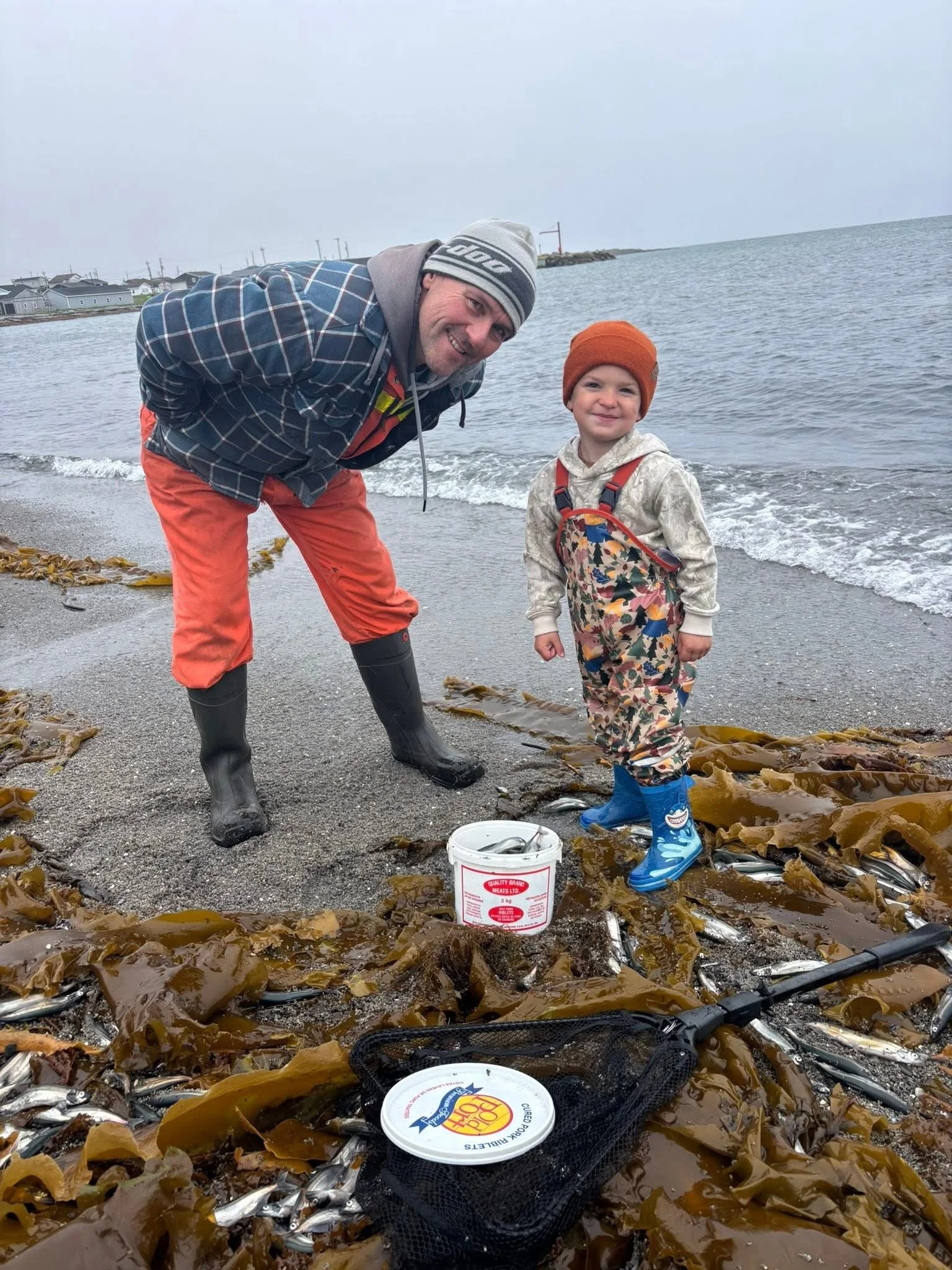
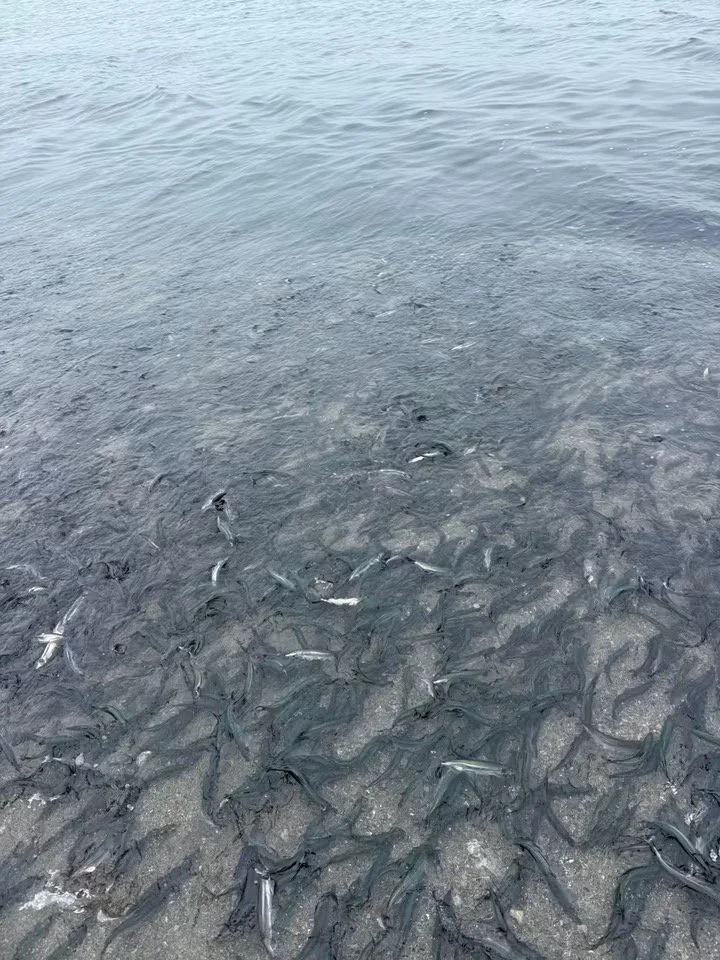
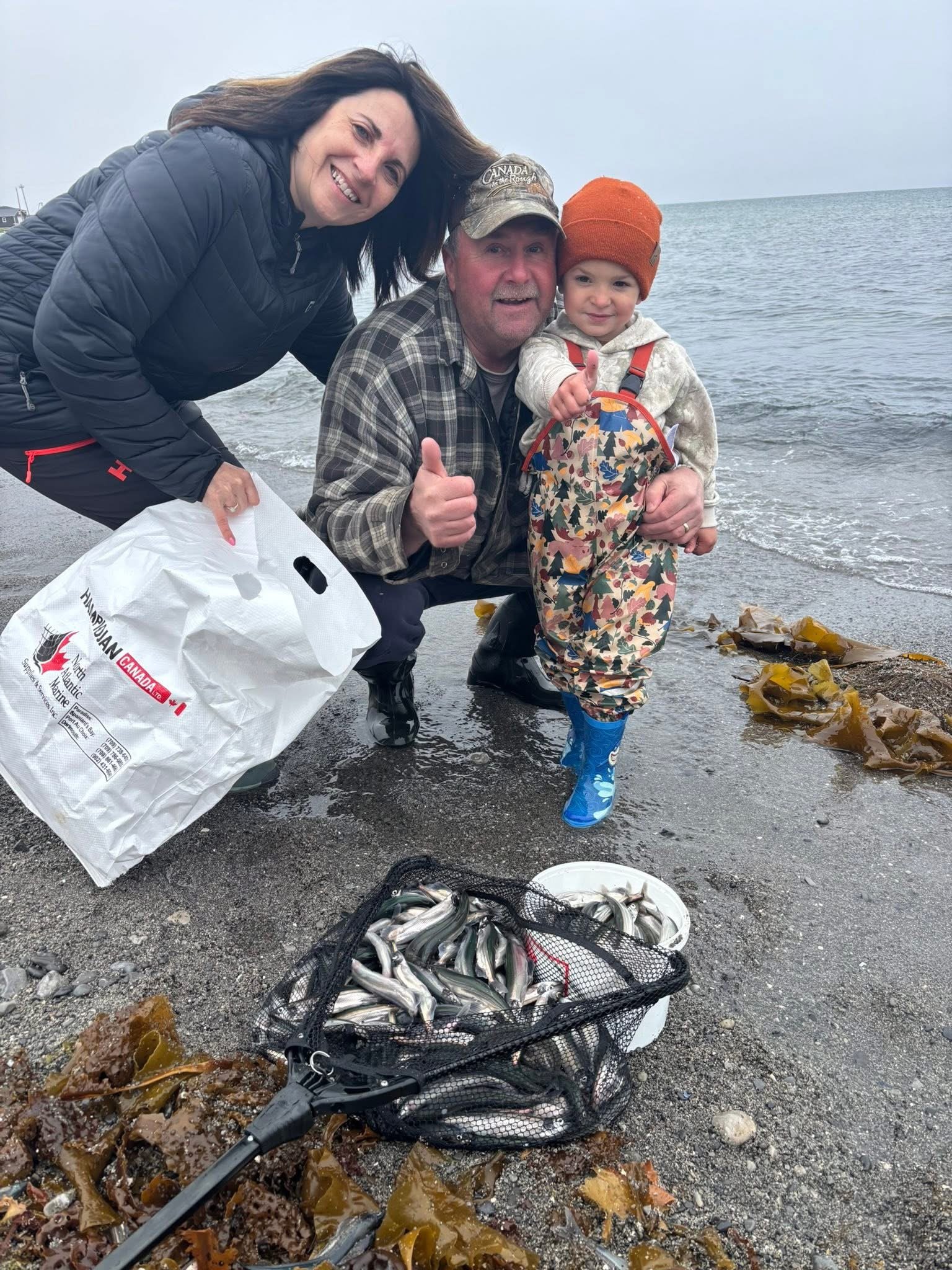
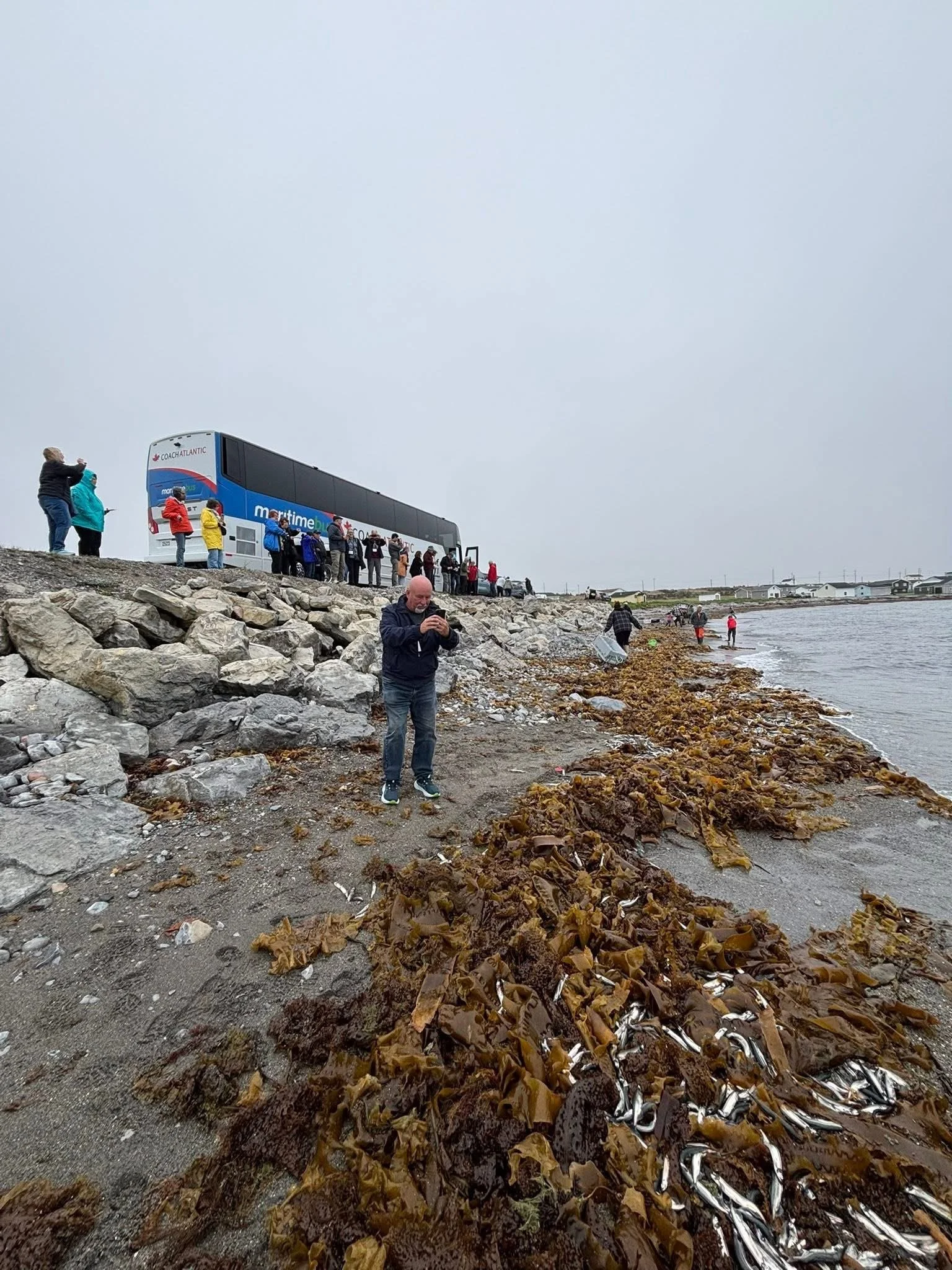
There was something truly special about standing on the beaches of Green Island Cove and watching the caplin finally roll ashore once again. For many of us, it had been at least 10 years since we had seen a caplin roll like this, and the excitement was impossible to put into words. The beaches quickly filled with families, neighbours, and visitors, all drawn together by a tradition that has been woven into the fabric of our coastal communities for generations. Children laughed as they watched the silver fish shimmer along the shoreline, while elders shared stories of years gone by, remembering a time when this was an expected and celebrated part of every summer.
For the people of Green Island Cove, the caplin are more than just fish. They are a symbol of who we are and where we come from. They remind us of the days when the fish plant was the heart of the community, a bustling workplace where generations earned a living and built a life from the sea. Fishing wasn’t simply an industry; it was a way of life. The sound of boats leaving the harbour, the activity at the plant, and neighbours working side by side created a strong sense of community and purpose.
When the cod moratorium was announced, everything changed. Like so many communities along the Straits of the Great Northern Peninsula, Green Island Cove felt the loss deeply. The closure of the local fish plant marked the end of an era, leaving many families to seek opportunities elsewhere while those who stayed carried on with resilience, pride, and hope for the future.
Watching the caplin return to our shores is a reminder that while much has changed, our connection to the ocean has never faded. It brings back memories of parents and grandparents who harvested caplin by hand, of evenings spent on the beach, and of a time when the rhythms of the sea shaped everyday life. These moments reconnect us with our roots and remind us of the strength, perseverance, and spirit that define our communities.
The caplin roll is more than a natural event, it is a homecoming. It is a celebration of our history, our heritage, and the people who have called this rugged coastline home for generations. For a little while, the beaches of Green Island Cove felt just as they once did, filled with laughter, stories, and the unmistakable feeling that some traditions, no matter how long they disappear, will always find their way back to us.
Did you enjoy reading this and previous stories on our Coastal Current, send us yours! Next time your story may be featured! We are also looking for local recipes to highlight GNP’s culinary and if you think you have certain skills and talents that are not practiced as much anymore and you think should be shared, tell us too!
Last but not least, we can also help promote local businesses through the Coastal Current. Reach out to learn more about available opportunities.
GCTA Staff and Contact Information
Erika Pardy - Executive Director
epardy@greatcoastaltrail.com
Lucas Garcia - Project Manager, Trails and Community
lgarcia@greatcoastaltrail.com
Amanda Gould - Community Engagement Officer
agould@greatcoastaltrail.com
Send questions, comments, suggestions to
Info@greatcoastaltrail.com
Send submissions, stories, photos, recipes to
Heritage@greatcoastaltrail.com
